

The fascinating world of bird behaviour has long been a subject of interest for scientists and enthusiasts alike. By studying the social interactions, migratory patterns, and mating rituals of birds, researchers have uncovered intriguing parallels between bird behaviour and human psychology.
The study of comparative psychology reveals that the evolutionary connections and cognitive similarities between birds and humans are more profound than initially thought. This field of study offers a unique lens through which we can understand human behaviour and psychological processes.
By examining the intricacies of bird behaviour, we can gain valuable insights into human psychology, shedding light on our own behaviours, emotions, and social structures.
Key Takeaways
- The study of bird behaviour offers insights into human psychology.
- Comparative psychology reveals evolutionary connections between birds and humans.
- Bird behaviour and human psychology share cognitive similarities.
- Understanding bird behaviour can shed light on human emotions and social structures.
- The parallels between birbehaviour and human psychology are fascinating and worth exploring.
The Fascinating Parallel Between Birds and Humans
The study of bird behaviour has revealed striking parallels with human psychology, shedding light on our evolutionary history and cognitive processes. This fascinating convergence is not merely coincidental but rooted in shared evolutionary pressures and cognitive mechanisms.
Evolutionary Connections Across Species
Birds and humans, though distinct species, share a common ancestor. This ancestral link has resulted in shared behavioural traits that are evident across different species.
Shared Ancestral Behaviours
Many behaviours observed in birds have counterparts in human societies. For instance, both birds and humans exhibit complex mating rituals and territorial behaviours. These similarities highlight the notion that certain behaviours are evolutionarily advantageous and have been conserved across species.
| Behavioral Trait | Birds | Humans |
|---|---|---|
| Mating Rituals | Complex courtship displays | Cultural courtship practices |
| Territorial Behavior | Defending nesting sites | Protecting personal and national territories |
Cognitive Similarities Despite Different Brain Structures
Despite having different brain structures, birds and humans exhibit cognitive similarities, particularly in problem-solving and memory. This is a testament to convergent evolution, where unrelated species develop similar traits in response to similar environmental challenges.
Convergent Evolution of Intelligence
The intelligence observed in birds, particularly in species like corvids and parrots, mirrors certain aspects of human intelligence. Both exhibit complex problem-solving abilities and innovation, highlighting the convergent evolution of intelligence across different species.
Understanding Bird Theory in Psychology
By examining the behaviour of birds, researchers have developed the Bird Theory, a psychological framework that sheds light on various aspects of human psychology. This theory is grounded in the observation that certain behaviours and psychological processes are shared across species, despite their distinct evolutionary paths.
Origins and Development of the Concept
The Bird Theory has its roots in ethology, the study of animal behaviour. Pioneering researchers in this field have played a crucial role in shaping our understanding of bird behaviour and its implications for human psychology.
Pioneering Researchers and Their Contributions
Researchers such as Konrad Lorenz and Nikolaas Tinbergen have made significant contributions to the field of ethology, laying the groundwork for ethological theory. Their work on bird behaviour, including mating rituals and migratory patterns, has provided valuable insights into the psychological processes underlying these behaviours.
Key Principles and Theoretical Framework
The Bird Theory is based on the premise that certain psychological processes, such as social behaviour and communication, are conserved across species. This theory provides a framework for understanding human behaviour by examining the similarities and differences between bird and human psychology.
Core Applications in Psychological Practice
The Bird Theory has several applications in psychological practice, including the study of sociobehaviour, communication, and attachment styles. By understanding the evolutionary roots of the behaviours, psychologists can develop more effective interventions and therapies.
Research Methodologies: Studying Birds to Understand Humans
To uncover the parallels between behaviour and human psychology, researchers employ a range of methodologies. These approaches allow scientists to investigate intricate relationships between birds and their environment, illuminating the origins of their behaviour.
Observational Studies in Natural Habitats
Observational studies in natural habitats provide invaluable insights into bird behaviour. By observing birds in their natural environments, researchers can identify patterns and behaviours that have evolved. For example, studies on bird flocks have revealed complex social structures and decision-making processes.
Laboratory Experiments and Ethical Considerations
Laboratory experiments provide a controlled environment for studying specific aspects of bird behaviour. Researchers can manipulate variables and test hypotheses in a setting that is not possible in the wild. However, laboratory experiments raise ethical considerations, such as ensuring the welfare of the birds and minimising stress.
Translating Findings to Human Psychology
The findings from both observational studies and laboratory experiments are then translated to human psychology. By comparing the behavioural patterns and cognitive processes of birds and humans, researchers can identify commonalities and differences. This comparative approach informs our understanding of human psychological processes and behaviours.
| Research Method | Description | Application to Human Psychology |
|---|---|---|
| Observational Studies | Studying bird behaviour in natural habitats | Understanding social structures and behaviours |
| Laboratory Experiments | Controlled studies on specific aspects of bird behaviour | Informing cognitive processes and behavioural patterns |
Social Structures: From Flocks to Human Communities
Observing the social dynamics of bird flocks can provide valuable insights into the workings of human communities and organisational psychology. The way birds interact within their flocks mirrors many aspects of human social behaviour, offering a unique perspective on collective decision-making and group dynamics.
Collective Decision-Making in Bird Flocks
Bird flocks are known for their impressive collective behaviours, such as synchronised flight patterns and coordinated foraging efforts. These behaviours are often the result of simple rules followed by individual birds, leading to complex group outcomes.
Leadership and Followership Patterns
In many bird species, leadership roles are not fixed and can shift based on context, such as during migration or foraging. This dynamic leadership is akin to human groups, where leadership roles can change based on the situation or expertise required.
Parallels to Human Group Dynamics
The study of bird flocking behaviour has several implications for understanding human group dynamics. For instance, the decentralised decision-making processes observed in bird flocks can inform organisational structures in human communities.
Implications for Organisational Psychology
Understanding how bird flocks achieve cohesion and make collective decisions can provide valuable insights into enhancing teamwork and leadership in human organisations. The table below highlights some key parallels:
| Bird Flock Behaviour | HumanOrganisational Equivalent |
|---|---|
| DeDecentralizedcentron-making | Flat or organisational structures |
| Adaptive leadership | Situational leadership in teams |
| Collective vigilance | Shared responsibility in teams |
By examining the social structures of bird flocks, we can gain a deeper understanding of human community dynamics and improve organisational practices.
Communication Systems: Songs, Calls, and Human Language
The study of bird communication systems reveals surprising similarities with human language, shedding light on our own linguistic abilities. Birds employ a range of vocalisations, including songs and calls, to convey information and coordinate their behaviour.
The Complexity of Bird Vocalisations
Bird vocalisations are just simple sounds; they are complex and varied, with different species exhibiting unique characteristics. Some birds are known to mimic other sounds they hear in their environment, showcasing their advanced vocal capabilities.
Regional Dialects and Cultural Transmission
Just like human languages, bird vocalisations exhibit regional dialects, where birds from different areas develop distinct sounds or variations in their songs. This phenomenon is a result of cultural transmission, where younger birds learn from older ones, passing on the specific vocal traits of their community.
What Bird Communication Reveals About Human Language Development
The study of bird communication provides valuable insights into human language development. The complexity and diversity of bird vocalisations suggest that the ability to develop complex communication systems is not unique to humans.
Neurological Underpinnings of Communication
Research into the neurological basis of bird song and human language has revealed striking similarities in the brain structures underlying these complex behaviours. This suggests a shared evolutionary origin for certain aspects of communication across species.
By understanding how birds communicate, we can gain a deeper appreciation for the complexities of human language and the underlying neurological mechanisms that support it.
Pair Bonding and Relationship Patterns
The intricate world of bird relationships offers a fascinating lens through which we can examine human pair bonding and attachment styles. Birds exhibit a wide range of mating behaviours, from long-term monogamy to complex polygamous arrangements, providing a rich source of comparison for understanding human relationship dynamics.
Monogamy, Polygamy, and Social Arrangements in Birds
Many bird species are known to form long-term, monogamous relationships, with some pairs remaining together for over 20 years. However, polygamy is also prevalent, with certain species exhibiting complex social structures involving multiple mates.
Parental Investment Strategies
In monogamous bird species, both parents typically invest heavily in raising their offspring, sharing responsibilities such as nest building, incubation, and feeding. In contrast, polygamous species often exhibit varying levels of parental investment, with some males contributing little to the care of their offspring.

Insights into Human Attachment Styles
The study of bird mating behaviours offers valuable insights into human attachment styles. Just as some bird species form long-lasting monogamous relationships, humans also exhibit varying attachment patterns, influenced by factors such as upbringing and past experiences.
Applications in Relationship Counselling
Understanding the parallels between bird and human attachment styles can inform relationship counselling practices. By rerecognizing the diversity of attachment patterns in both birds and humans, therapists can develop more nuanced approaches to helping couples build stronger, more resilient relationships.
Territorial Behaviour: Space and Identity
The way birds fiercely defend their territories offers intriguing insights into human concepts of space and identity. Territorial behaviour is a crucial aspect of avian life, influencing survival, mating, and social organisation.
Establishing and Defending Territory
Birds use various methods to establish and defend their territories, including vocalisations, display behaviours, and aggressive encounters. Signalling and boundary maintenance are crucial for deterring intruders and maintaining territorial integrity. Signallinggg and Boundary Maintenance
Birds employ a range of signals to demarcate their territories, from melodious songs to vibrant plumage displays. These signals serve as warnings to potential intruders, helping to maintain boundary integrity without resorting to physical confrontations.
Human Concepts of Personal Space and Property
The parallels between avian territoriality and human concepts of personal space and property are striking. Just as birds defend their territories, humans have an innate sense of territoriality, influenced by cultural, social, and personal factors.
Cultural Variations in Territorial Psychology
Cultural variations significantly impact how humans perceive and defend their personal and communal spaces. For instance, some cultures have a strong sense of territoriality tied to historical lands, while others may have more flexible boundaries.
Understanding these cultural variations is essential for grasping the complexities of human territorial behaviour, which echoes the diversity seen in avian territorial strategies.
Migration Patterns and Human Resilience
Understanding bird migration patterns can offer profound insights into human resilience, particularly in the face of significant life changes. The ability of birds to navigate across vast distances, often returning to precise locations year after year, is a testament to their remarkable adaptability.
The Remarkable Navigation Abilities of Birds. A combination of genetic predispositions and learned experiences guides birds’ migratory journeys. guides them through a complexx interplayof journeys, enabling thems to traverse continents and adapt to new environments.
Genetic and Learned Components of Migration
The genetic component of bird migration is evident in the innate abilities of young birds to navigate. However, learned behaviours, passed down through generations, also play a crucial role. Key factors include:
- Celestial navigation
- Magnetic field detection
- Topographic cues
Psychological Aspects of Human Movement and Adaptation
Just as birds face challenges during migration, humans encounter various life transitions that test their resilience. Understanding the psychological aspects of these transitions can help individuals better cope with change.
Lessons for Managing Life Transitions
Studying bird migration patterns can provide valuable insights into managing human life transitions, such as:
- Developing coping strategies
- Building support networks
- Embracing flexibility and adaptability
By examining the resilience of migratory birds, we can gain a deeper understanding of human resilience and develop more effective strategies for navigating life’s challenges.
Problem-Solving and Tool Use: Avian Intelligence
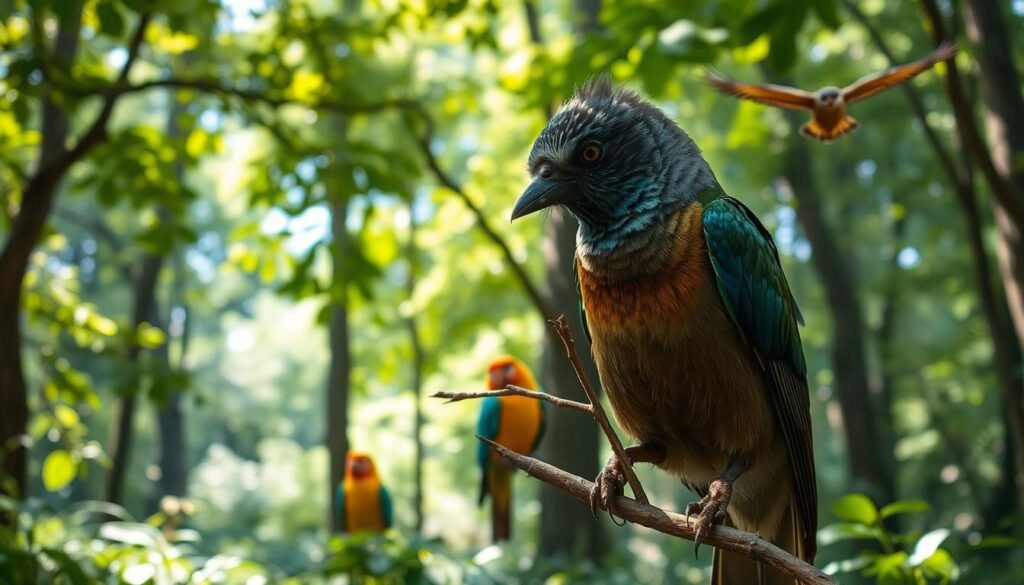
Birds, particularly corvids and parrots, have been observed exhibiting complex problem-solving skills that rival those of primates. This observation has sparked significant interest in the study of avian intelligence and its implications for understanding cognitive processes across species.
The study of bird intelligence is not just about understanding birds; it offers insights into the evolution of intelligence and problem-solving strategies. By examining how birds approach challenges, researchers can gain a deeper understanding of the cognitive mechanisms at play.
Cognitive Abilities in Corvids and Parrots
Corvids, including crows and ravens,as well as parrots, are renowned for their exceptional cognitive abilities. These birds have been observed using tools in complex ways, solving puzzles, and even exhibiting playful behaviour.
Case Studies of Remarkable Bird Problem-Solving
- A notable example is the New Caledonian crow, which uses sticks to extract grubs from tree bark, demonstrating a sophisticated understanding of tool use.
- Parrots have been observed solving complex puzzles, such as figuring out how to open doors or manipulate objects to get a reward.
Implications for Understanding Human Creativity
The study of avian intelligence has significant implications for understanding human creativity. By examining how birds innovate and solve problems, researchers can gain insights into the cognitive processes that underlie human creativity.
Neurological Basis of Innovation
Research suggests that the neurological basis of innovation in birds and humans may share commonalities. Understanding these shared mechanisms can provide valuable insights into enhancing human creativity and problem-solving abilities.
In conclusion, the study of avian intelligence, particularly in corvids, provides fascinating insight into the cognitive processes and complex behaviours. By exploring these abilities, we can gain a deeper understanding of both avian and human cognition.
Limitations and Criticisms of Bird-Human Comparisons
As we explore the parallels between avian and human behaviour, we must also consider the potential pitfalls associated with these comparisons. While studying birds can offer valuable insights into human psychology, there are significant limitations and criticisms to be addressed.
Anthropomorphism Concerns
One of the primary criticisms of comparing bird behaviour to human psychology is the risk of anthropomorphism – attributing human characteristics to non-human entities, in this case, birds. Anthropomorphism can lead to the misinterpretation of behaviours, potentially skewing our understanding of their actions and motivations.
When Parallels Break Down
There are instances where the parallels between birds and their behaviour break down. For example, while some bird species exhibit complex behaviours, these behaviours are often driven by instinct and survival needs rather than the complex emotional or cognitive processes seen in humans.
Alternative Explanations for Similar Behaviours
Similar behaviours and humans can have different underlying causes. It’s essential to consider alternative explanations for these behaviours rather than assuming the same psychological mechanisms drive them.
The Danger of Oversimplification
Oversimplification is another pitfall when comparing bird and human behaviours. Complex psychological phenomena cannot be fully understood by drawing direct comparisons with animal behaviours without considering the unique aspects of human cognition and culture.
By acknowledging these limitations and criticisms, researchers can refine their approaches to studying bird behaviour in the context of human psychology, ensuring a more nuanced and accurate understanding of both.
Applications of Bird Theory in Modern Psychology
By examining avian behaviour, researchers have discovered new applications for human psychology. The bird theory offers unique insights into human behaviour and mental processes, providing a fresh perspective on psychological practices.
Therapeutic Approaches Inspired by Avian Behaviour
The study of birds has led to the development of innovative therapeutic approaches. For instance, observing the migratory patterns of birds has inspired new strategies for treating seasonal affective disorder.
Nature-Based Interventions
Nature-based interventions, inspired by the natural behaviours of birds, are being increasingly used in therapy. These interventions encourage individuals to connect with nature, promoting mental well-being.
Research Directions and Future Potential
The integration of bird theory into modern psychology opens up new avenues for research. Future studies could explore the cognitive processes underlying avian behaviour and their implications for human psychology.
Interdisciplinary Collaborations
Interdisciplinary collaborations between ornithologists and psychologists are crucial for advancing the field. By working together, researchers can uncover new applications of bird theory in psychology.
Conclusion: Soaring to New Psychological Insights
The study of behavioural biology offers a unique lens through which to examine human psychology. Examining the parallels between avian and human behaviour, researchers can gain valuable insights into the underlying mechanisms that drive human thought and action.
The application of bird theory in psychology has the potential to inform new approaches to understanding human behaviour, from social structures to communication patterns. As researchers continue to explore the complexities of bird behaviour, they may uncover new avenues for addressing complex human psychological issues.
By embracing this interdisciplinary approach, psychologists can develop innovative therapeutic strategies and iimprove theirunderstanding of human psychology. The study of bird behaviour serves as a reminder of the intricate connections between species and the potential for cross-species insights to inform human well-being.
As we continue to explore the intricacies of bird theory, we may uncover new psychological insights that can be applied to real-world problems, ultimately enriching our understanding of human psychology and improving mental health outcomes.


Leave a Reply to Devan Schmeler Cancel reply